
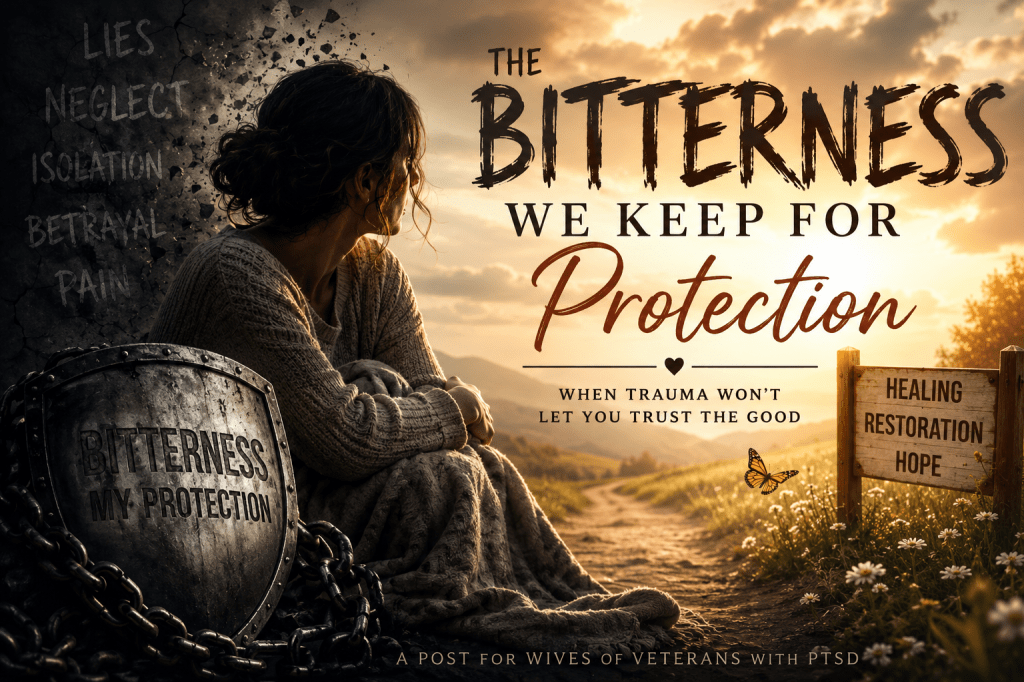
It’s difficult not to carry bitterness after years of lies, isolation, disappointment, and neglect. Even when progress finally begins to happen—when you start to see the changes you’ve prayed for over countless sleepless nights—your trauma-fogged mind doesn’t immediately celebrate. Instead, it whispers, What if this doesn’t last? What if this all falls apart again?
Before long, those whispers become screams. Don’t trust it. Don’t believe it. You’re going to suffer again.
It’s a fight-or-flight response that every wife living alongside PTSD understands. It’s that familiar feeling of being pulled back into the darkness just when you thought you had finally found your footing. You try so hard to climb out of the hole, only to find yourself peering back over the edge, waiting for the ground to give way beneath you again.
The truth is, that kind of bitterness doesn’t simply disappear when happiness or healing begins to emerge. It lingers quietly in the background, like a shadow waiting for the perfect opportunity to remind you why you built walls around your heart in the first place. It waits for one bad day, one harsh word, one familiar pattern, hoping to convince you that nothing has really changed after all.
Because when you’ve lived in survival mode for so long, joy itself can feel unsafe.
At the end of the day, the feelings of happiness, romance, love, being wanted, being needed, and finally being seen can sometimes feel like a mask you’re simply waiting to slip off. You’re bracing yourself for the moment when the only reality you’ve ever truly known comes rushing back. The bitterness you’ve held onto wasn’t always hatred—it was protection. It was armor. It was the emergency plan you kept hidden away because some part of you refused to trust that restoration could actually be real.
Trauma leaves wounds that do not always bleed where others can see them. They remain open beneath the surface, quietly whispering that you’ll never be enough, that you’re not safe, and that hope is dangerous.
But perhaps the greatest act of faith isn’t pretending those wounds don’t exist. Perhaps it’s choosing, one day at a time, to believe that God can heal the places we’ve spent years trying to protect ourselves from feeling.
 Life As A PTSD Wife