

I used to think rest meant getting more sleep.
Taking a day off.
Watching a movie.
Going on vacation.
Sitting quietly with a cup of coffee.
But I’ve learned there is a kind of exhaustion that sleep can’t touch.
It’s the exhaustion that comes from never allowing your mind to fully let go.
If you’re married to someone battling PTSD and addiction, you probably know exactly what I’m talking about.
Your body may be sitting on the couch, but your mind is somewhere else.
It’s wondering if what you’re being told is the whole truth.
It’s replaying yesterday’s conversation, trying to figure out if you missed something.
It’s noticing little changes in behavior that no one else would ever see.
It’s preparing for the next disappointment before this one has even had time to heal.
You don’t even realize you’re doing it anymore.
It has simply become the way you survive.
I don’t think people understand how loud it is inside our minds.
On the outside, we smile.
We go to work.
We cook dinner.
We laugh with our children.
We sit beside our husbands at church.
We answer, “I’m good,” when someone asks how we’re doing.
But inside… our minds never stop searching for solid ground.
I can’t remember the last time I completely relaxed.
Not because I don’t want to.
Because I don’t know how.
When your heart has been blindsided enough times, it begins to believe that if it stays alert, maybe it can prevent the next heartbreak.
So we stay busy.
We keep cleaning.
We keep organizing.
We keep serving everyone around us.
We keep thinking.
Constantly thinking.
Because slowing down means feeling.
And feeling means touching the grief we’ve spent so much energy trying to hold together.
What I’ve realized is that I haven’t just been carrying my own pain.
I’ve been carrying his too.
His PTSD.
His addiction.
His shame.
His recovery.
His choices.
His consequences.
As if somehow, if I could carry enough of it, maybe he wouldn’t have to.
Maybe then he’d finally have enough strength to get better.
But somewhere along the way, I quietly became exhausted from carrying a burden that was never mine to carry.
Maybe you have too.
Maybe that’s why you’re so tired.
Not because you’re weak.
Not because you’re doing life wrong.
But because you’ve been trying to hold together things that only God can hold.
I wish I could tell you I’ve learned how to quiet my mind.
I haven’t.
There are still nights when my thoughts race faster than I can pray.
There are still days when one unanswered question steals my peace.
There are still moments when I catch myself looking for evidence that everything is okay instead of simply living.
But I’ve discovered something beautiful.
The only place my mind ever stops fighting… is at the feet of Jesus.
Not because my circumstances suddenly change.
Not because the addiction disappears.
Not because tomorrow suddenly feels certain.
But because His presence reminds me that I was never asked to carry tomorrow.
I was only asked to trust Him with today.
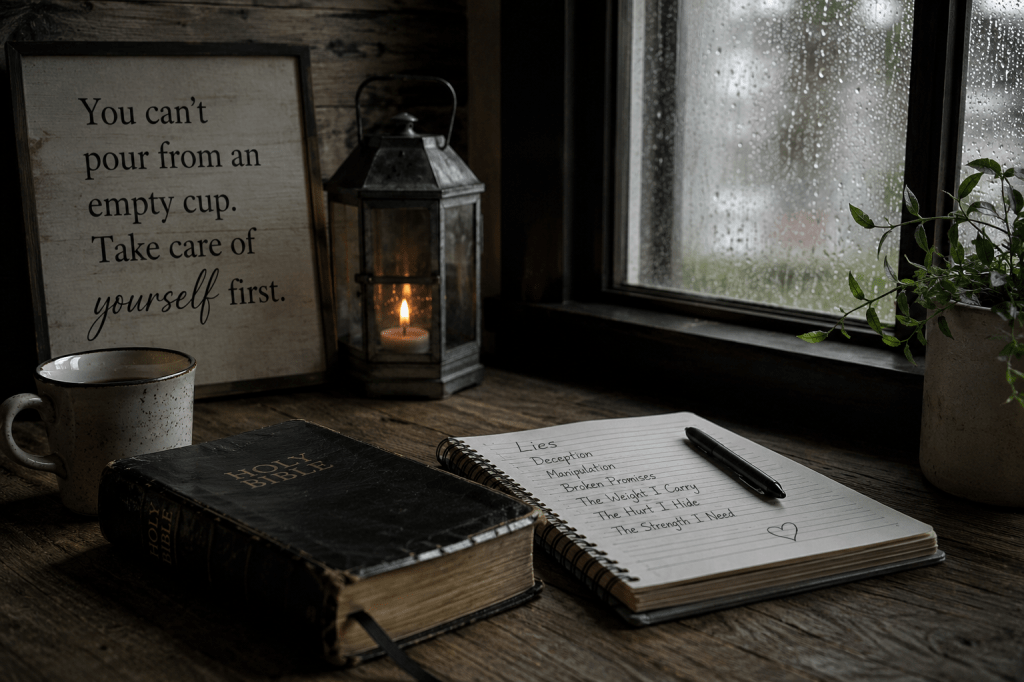
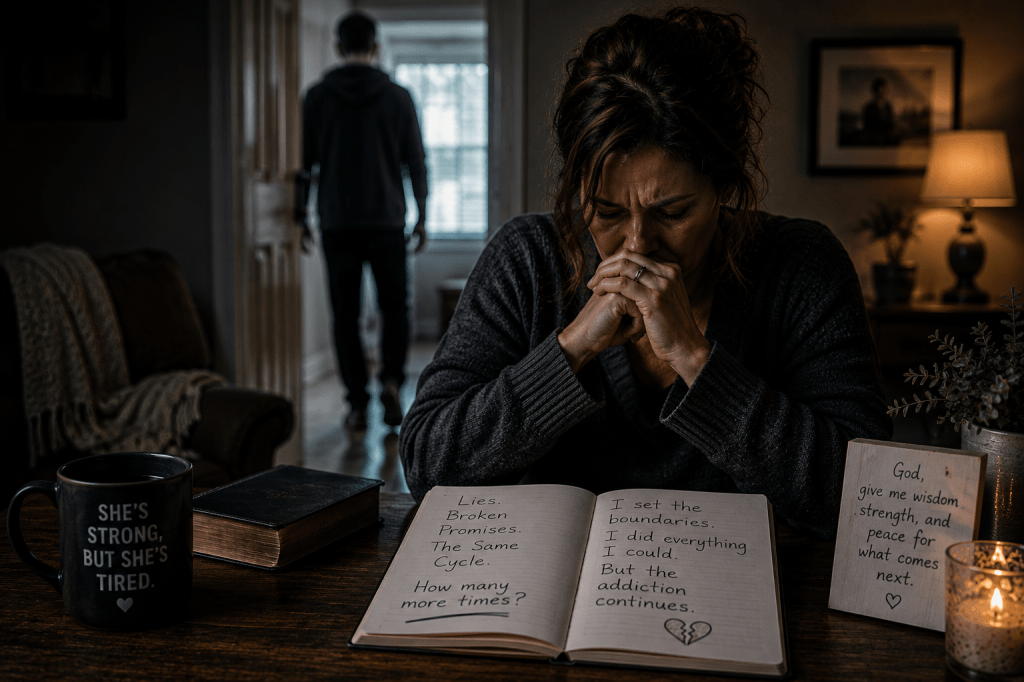
There are moments when I open my Bible with tears already filling my eyes, and before I even finish reading, I can almost feel my soul exhale.
For just a moment, the fear grows quieter.
The “what ifs” loosen their grip.
The constant pressure to figure everything out fades into the background.
Nothing around me has changed.
But something inside me has.
Not because I became stronger.
Because I remembered who was carrying me.
Maybe that’s what our souls have been searching for all along.
Not another answer.
Not another promise from the person we love.
Not another guarantee that everything will finally be okay.
Maybe we’ve simply been longing for a place where our weary hearts can finally set the weight down.
Jesus knew there would be people like us.
People who would become weary from carrying burdens they were never meant to carry alone.
That is why His invitation still reaches into my heart every single time I read it:
“Come unto me, all ye that labour and are heavy laden, and I will give you rest.” — Matthew 11:28
Lately, when the noise in my mind becomes too loud, I’ve found myself playing “Quiet (Stripped)” by Maverick City Music.
There is something about those simple lyrics that reminds me of what my heart has been longing for all along—not answers, not certainty, just the quiet peace that only God’s presence can bring.
Maybe that’s why I keep coming back to Jesus.
Not because everything is okay.
But because when my mind refuses to rest, He gently reminds my soul that it can.
If your heart is weary today, I pray you’ll find a quiet place, open His Word, press play, and simply sit with Him for a while.
You don’t have to carry it all today.
Just come.







 Life As A PTSD Wife