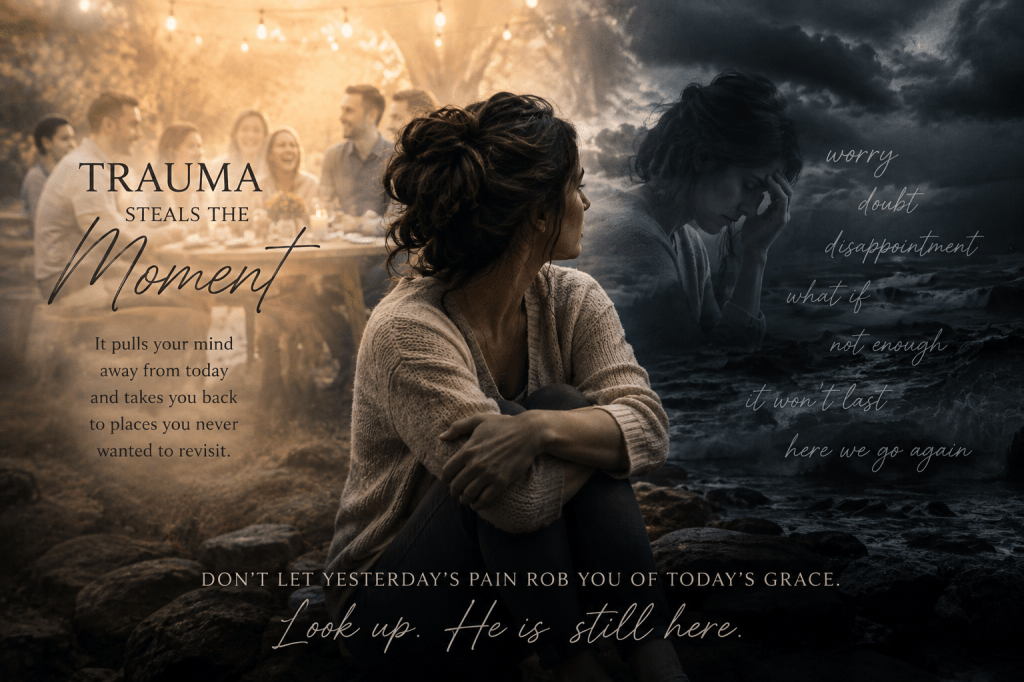
One of the hardest things about trauma is that it doesn’t ask permission before it interrupts your life.
You can be surrounded by the people you love.
Sitting at dinner with your family.
Laughing with friends.
Worshipping at church.
Watching your child do something that should fill your heart with joy.
Everything around you says, “Be present.”
But your mind quietly slips somewhere else.
Without warning, you’re no longer fully in the room.
You’re back in the place where trust was broken.
Where disappointment lives.
Where the unanswered questions still echo.
Where your heart learned to prepare for the worst before it ever had the chance to enjoy the best.
Trauma has a way of convincing your mind that if it stays alert, it can somehow protect you from being hurt again.
So while everyone else is enjoying the moment, your thoughts begin racing.
What if something happens?
What if this doesn’t last?
What if I’m missing something?
What if the peace I feel right now disappears tomorrow?
And before you even realize what’s happening, fear has quietly stolen the very moment you were longing to enjoy.
That is what trauma does.
It doesn’t always scream.
Sometimes it whispers.
It quietly pulls your attention away from the people sitting right in front of you and redirects it toward worries that don’t even exist yet.
It steals laughter before it has the chance to become joy.
It replaces peace with vigilance.
It convinces you that if you let your guard down, you’ll somehow be caught off guard again.
Even on the days when your soul finally feels calm…
when you wake up lighter…
when you begin to believe healing is happening…
it can feel as though a wave suddenly crashes over you.
A memory.
A feeling.
A smell.
A thought.
A disappointment you didn’t see coming.
And suddenly you’re underwater again.
Not because you chose to go there.
But because trauma remembered before you did.
I’ve learned that healing isn’t the absence of those waves.
Healing is recognizing that they no longer define where I live.
They still come.
But they don’t get to stay.
The wave may crash over me, but it doesn’t get to carry me away.
Because there is One who walks on the very waters that once convinced me I was drowning.
When Peter took his eyes off Jesus, the waves became bigger than the One who had called him out of the boat.
How often do we do the same?
We become so focused on the waves of yesterday that we miss the presence of the Savior standing with us today.
Jesus never promised that the storm would disappear.
But He did promise that He would be with us in it.
Maybe today the enemy isn’t trying to steal your future.
Maybe he’s trying to steal this moment.
The laughter you’re hearing.
The hug you’re receiving.
The worship filling the room.
The smile on your child’s face.
The peace God has graciously given you today.
Don’t let yesterday’s pain rob you of today’s grace.
And when you feel your mind drifting back into places you never wanted to revisit, gently bring it back to the One who is already waiting for you there.
“Thou wilt keep him in perfect peace, whose mind is stayed on thee: because he trusteth in thee.” — Isaiah 26:3
Perfect peace doesn’t come because our minds never wander.
It comes because every time they do, we know where to bring them back.
Back to Jesus.
Back to truth.
Back to the present.
Back to the grace that is waiting for us in this very moment.
But I’ve learned there is a kind of exhaustion that sleep can’t touch.
It’s the exhaustion that comes from never allowing your mind to fully let go.
If you’re married to someone battling PTSD and addiction, you probably know exactly what I’m talking about.
Your body may be sitting on the couch, but your mind is somewhere else.
It’s wondering if what you’re being told is the whole truth.
It’s replaying yesterday’s conversation, trying to figure out if you missed something.
It’s noticing little changes in behavior that no one else would ever see.
It’s preparing for the next disappointment before this one has even had time to heal.
You don’t even realize you’re doing it anymore.
It has simply become the way you survive.
I don’t think people understand how loud it is inside our minds.
On the outside, we smile.
We go to work.
We cook dinner.
We laugh with our children.
We sit beside our husbands at church.
We answer, “I’m good,” when someone asks how we’re doing.
But inside… our minds never stop searching for solid ground.
I can’t remember the last time I completely relaxed.
Not because I don’t want to.
Because I don’t know how.
When your heart has been blindsided enough times, it begins to believe that if it stays alert, maybe it can prevent the next heartbreak.
So we stay busy.
We keep cleaning.
We keep organizing.
We keep serving everyone around us.
We keep thinking.
Constantly thinking.
Because slowing down means feeling.
And feeling means touching the grief we’ve spent so much energy trying to hold together.
What I’ve realized is that I haven’t just been carrying my own pain.
I’ve been carrying his too.
His PTSD.
His addiction.
His shame.
His recovery.
His choices.
His consequences.
As if somehow, if I could carry enough of it, maybe he wouldn’t have to.
Maybe then he’d finally have enough strength to get better.
But somewhere along the way, I quietly became exhausted from carrying a burden that was never mine to carry.
Maybe you have too.
Maybe that’s why you’re so tired.
Not because you’re weak.
Not because you’re doing life wrong.
But because you’ve been trying to hold together things that only God can hold.
I wish I could tell you I’ve learned how to quiet my mind.
I haven’t.
There are still nights when my thoughts race faster than I can pray.
There are still days when one unanswered question steals my peace.
There are still moments when I catch myself looking for evidence that everything is okay instead of simply living.
But I’ve discovered something beautiful.
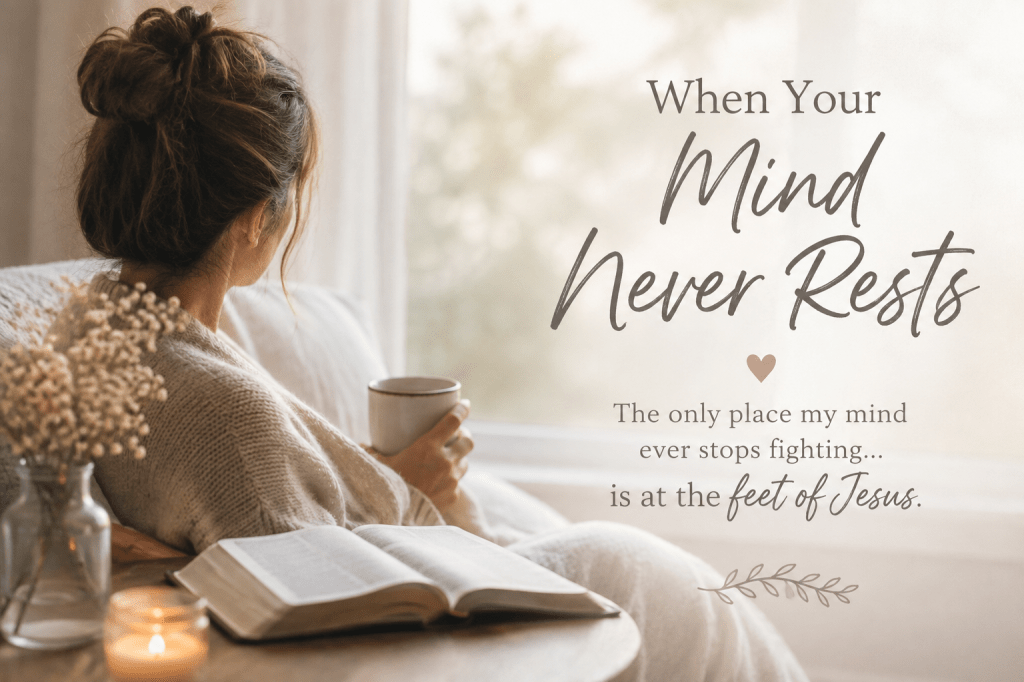
The only place my mind ever stops fighting… is at the feet of Jesus.
Not because my circumstances suddenly change.
Not because the addiction disappears.
Not because tomorrow suddenly feels certain.
But because His presence reminds me that I was never asked to carry tomorrow.
I was only asked to trust Him with today.
There are moments when I open my Bible with tears already filling my eyes, and before I even finish reading, I can almost feel my soul exhale.
For just a moment, the fear grows quieter.
The “what ifs” loosen their grip.
The constant pressure to figure everything out fades into the background.
Nothing around me has changed.
But something inside me has.
Not because I became stronger.
Because I remembered who was carrying me.
Maybe that’s what our souls have been searching for all along.
Not another answer.
Not another promise from the person we love.
Not another guarantee that everything will finally be okay.
Maybe we’ve simply been longing for a place where our weary hearts can finally set the weight down.
Jesus knew there would be people like us.
People who would become weary from carrying burdens they were never meant to carry alone.
That is why His invitation still reaches into my heart every single time I read it:
“Come unto me, all ye that labour and are heavy laden, and I will give you rest.” — Matthew 11:28
Lately, when the noise in my mind becomes too loud, I’ve found myself playing “Quiet (Stripped)” by Maverick City Music.
There is something about those simple lyrics that reminds me of what my heart has been longing for all along—not answers, not certainty, just the quiet peace that only God’s presence can bring.
Maybe that’s why I keep coming back to Jesus.
Not because everything is okay.
But because when my mind refuses to rest, He gently reminds my soul that it can.
If your heart is weary today, I pray you’ll find a quiet place, open His Word, press play, and simply sit with Him for a while.
I have taken full control of them because addiction made it necessary.
We’ve done rehab.
We’ve done therapy.
We’ve involved family.
We’ve brought other people into the situation for accountability.
We’ve had the conversations.
We’ve cried.
We’ve prayed.
We’ve made plans.
We’ve talked about consequences.
We’ve had promises made after painful discoveries.
We’ve tried things that were supposed to help.
And still…
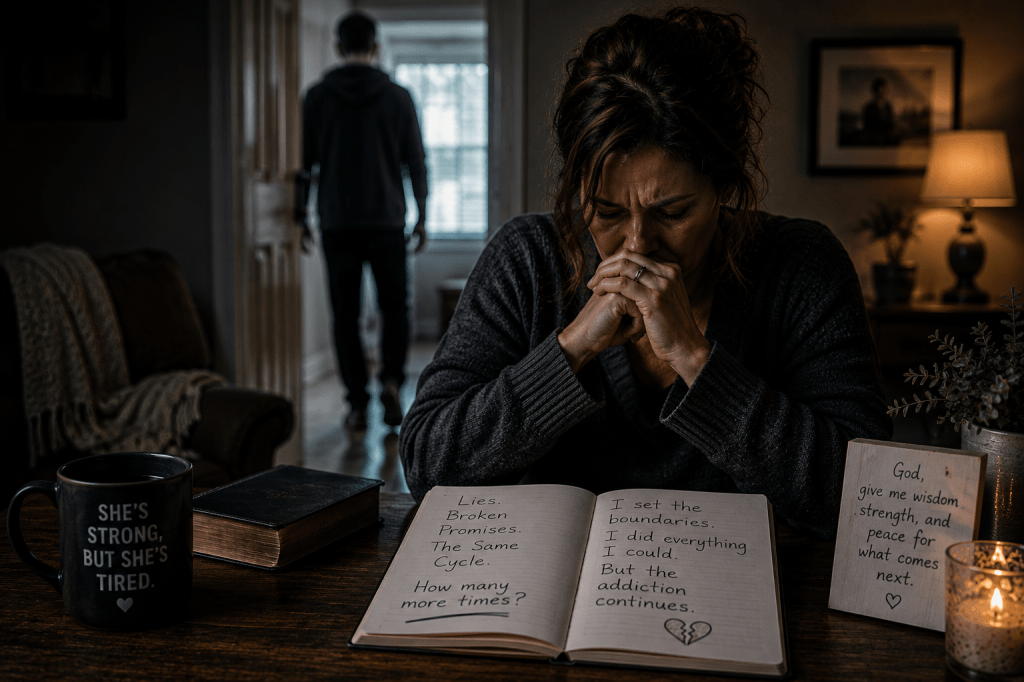
the addiction continues.
The lies continue.
That’s the part I’m struggling to understand now.
Because eventually you run out of smaller boundaries.
There comes a point where you’ve already moved the money. You’ve already created accountability. You’ve already encouraged treatment. You’ve already stopped hiding everything from the people closest to you.
And you’re still standing there looking at the same behavior.
So what boundary comes next?
That question terrifies me.
When You’ve Done Everything Except Leave
Maybe that’s the part I haven’t wanted to say out loud.
What happens when you’ve done almost everything you know to do except physically remove yourself from the cycle?
That’s a much harder question than, “How do I set a boundary?”
Because I know how to set boundaries now.
I know how to protect the finances.
I know how to say no.
I know how to involve other people.
I know how to encourage treatment.
I know how to recognize manipulation much faster than I used to.
What I don’t always know is what to do when none of it changes the person I love.
There is a painful realization that comes with that:
Maybe the purpose of my boundaries was never to make him change.
I think somewhere inside me, I still believed they would.
If I controlled the finances, maybe the gambling would stop.
If enough people knew, maybe the accountability would stop the lying.
If he went to rehab, maybe he would finally understand.
If therapy uncovered the deeper issues, maybe everything would begin to change.
If he saw how close he came to losing his marriage, surely that would be enough.
But what happens when it isn’t?
What happens when every safeguard you put into place becomes another obstacle the addiction learns how to work around?
That is when boundaries stop feeling empowering and start feeling heartbreaking.
Because I am forced to confront something I desperately don’t want to be true:
I can make it harder for addiction to destroy our lives, but I cannot make another person choose recovery.
I Cannot Boundary Someone Into Recovery
That sentence hurts to write.
I cannot boundary someone into recovery.
I cannot monitor someone into honesty.
I cannot control the finances enough to create integrity.
I cannot make accountability work if someone is determined to hide.
I cannot love someone into telling the truth.
I cannot find the perfect therapist, rehabilitation center, consequence, Bible verse, conversation, or arrangement that will make someone choose something they are unwilling to choose for themselves.
And maybe that’s why this stage feels so different.
In the beginning, there was always another thing to try.
Another conversation.
Another boundary.
Another safeguard.
Another treatment.
Another chance.
Doing something made me feel like there was still something I could control.
But eventually you arrive at a place where the question isn’t:
“What else can I do to stop him?”
It becomes:
“What am I going to do if he doesn’t stop?”
And I don’t like that question nearly as much.
Because that question is about me.
The Apology Doesn’t Fix It Anymore
There was a time when an apology brought relief.
Maybe this time he understood.
Maybe this was rock bottom.
Maybe losing this much would finally be enough.
Maybe seeing me this broken would finally make something click.
But after enough cycles, apologies begin to feel different.
You want to believe them.
Part of you still does.
But another part of you is quietly keeping track of everything that came before.
You remember the other apologies.
The other promises.
The other “last times.”
The other moments when you thought the nightmare was finally ending.
So you’re standing there listening to someone say they’re sorry while two completely different voices are fighting inside you.
One says:
Give him grace.
People mess up.
Addiction is hard.
Marriage means fighting for each other.
God can still restore this.
And the other says:
We’ve been here before.
That second voice used to make me feel guilty.
Now I’m beginning to wonder if that voice isn’t bitterness at all.
Maybe it’s discernment.
Maybe wisdom sometimes remembers the pattern even when your heart desperately wants to believe the promise.
When Hope Starts Keeping You Stuck
This is difficult for me to admit because hope sounds like such a beautiful Christian word.
And it is.
I believe in hope.
I believe God changes people.
I believe marriages can be restored.
I believe addicts can recover.
I believe broken things can become beautiful again.
But I’m beginning to understand that hoping someone changes and living as though they already have are two very different things.
I can hope for recovery without pretending recovery is happening.
I can pray for honesty while acknowledging that I’m still being lied to.
I can believe God can restore my marriage without calling the current situation restored.
Maybe faith isn’t denying what is happening because I’m afraid of what acknowledging it might require me to do.
Maybe faith is trusting God enough to tell the truth about what is happening.
This Is Where Avoidance Gets Really Uncomfortable
Because when all the smaller boundaries have already been put into place, there aren’t many comfortable options left.
That’s when my avoidant side wants to bargain.
Maybe give it a little more time.
Maybe this apology is different.
Maybe therapy will eventually click.
Maybe I need to be more understanding.
Maybe I’m expecting too much too quickly.
Maybe I should just be thankful for the good days.
Some of those thoughts may occasionally contain truth.
Recovery isn’t perfect.
People do stumble.
Change takes time.
But there is also a difference between an imperfect recovery and an ongoing pattern of addiction, deception, and manipulation without sustained change.
I have to be careful that compassion doesn’t become the excuse I use to avoid making a decision.
Because eventually, “give it more time” can become years.
The Boundary I’m Afraid Of
Maybe this is where I am learning that the hardest boundary isn’t controlling money.
It isn’t demanding treatment.
It isn’t telling family.
It isn’t even saying, “I won’t tolerate this anymore.”
The hardest boundary may be accepting what I will have to do if nothing changes.
I don’t write that lightly.
I don’t believe marriage should be discarded because things become difficult.
I don’t believe struggling with addiction makes someone unworthy of love.
And I certainly don’t believe every wife reading this should make the same decision.
But I also no longer believe that loving someone requires me to endlessly absorb the consequences of choices I cannot control.
There is a point where I have to stop asking:
“What else can I do to make him change?”
and start asking:
“God, what are You asking me to do if he chooses not to?”
That prayer scares me.
Because I have spent so much time praying for God to change him.
Maybe now I also need the courage to ask God to show me what obedience looks like for me.
Maybe Boundaries Were Never About Saving My Marriage
I wanted boundaries to save my marriage.
I wanted treatment to save it.
I wanted accountability to save it.
I wanted controlling the finances to save it.
I wanted therapy to save it.
I wanted love, patience, forgiveness, prayer, consequences, and second chances to eventually add up to transformation.
But none of those things can substitute for another person’s willingness to change.
Maybe boundaries aren’t how I save my marriage.
Maybe boundaries are how I stop losing myself while I wait to see what the other person chooses.
And maybe that is what I am finally beginning to understand.
I can love him.
I can pray for him.
I can forgive him.
I can hope for him.
I can believe with everything inside me that God is capable of completely transforming his life.
And I can still tell the truth about what is happening right now.
The addiction continues.
The lies continue.
The boundaries haven’t produced the change I hoped they would.
And I cannot keep pretending that an apology is the same thing as recovery.
Maybe the next step isn’t another rule for him.
Maybe it’s finally asking God what He wants from me when I have done everything I know to do—and the person I love still chooses the addiction.
I don’t have a neat answer to that yet.
Maybe that’s okay.
Maybe understanding myself begins with finally being willing to ask the question.
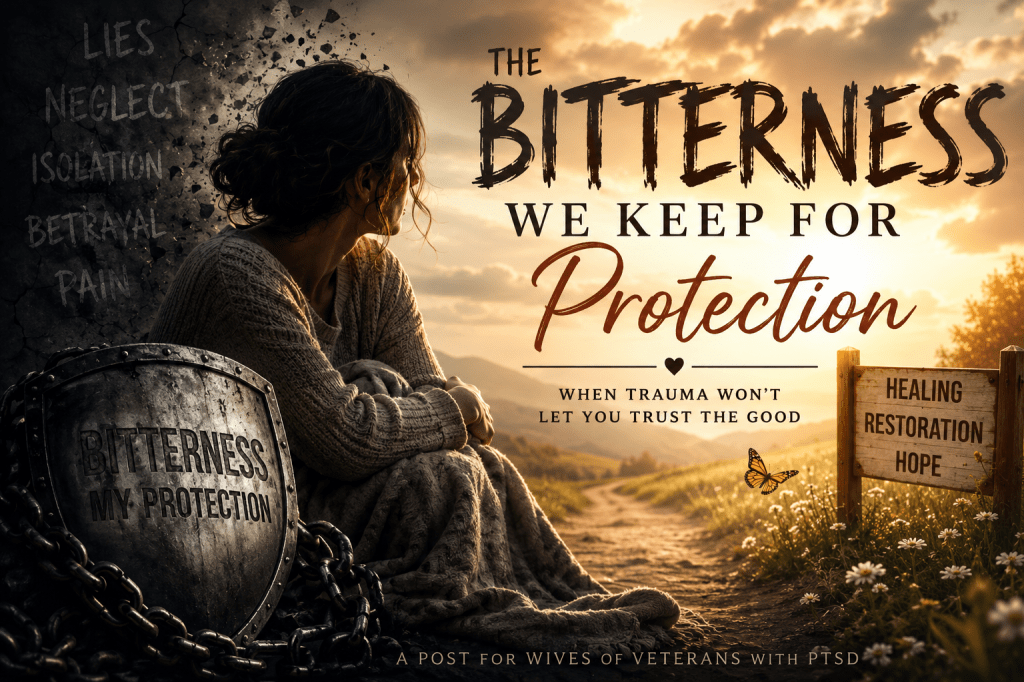
It’s difficult not to carry bitterness after years of lies, isolation, disappointment, and neglect. Even when progress finally begins to happen—when you start to see the changes you’ve prayed for over countless sleepless nights—your trauma-fogged mind doesn’t immediately celebrate. Instead, it whispers, What if this doesn’t last? What if this all falls apart again?
Before long, those whispers become screams. Don’t trust it. Don’t believe it. You’re going to suffer again.
It’s a fight-or-flight response that every wife living alongside PTSD understands. It’s that familiar feeling of being pulled back into the darkness just when you thought you had finally found your footing. You try so hard to climb out of the hole, only to find yourself peering back over the edge, waiting for the ground to give way beneath you again.
The truth is, that kind of bitterness doesn’t simply disappear when happiness or healing begins to emerge. It lingers quietly in the background, like a shadow waiting for the perfect opportunity to remind you why you built walls around your heart in the first place. It waits for one bad day, one harsh word, one familiar pattern, hoping to convince you that nothing has really changed after all.
Because when you’ve lived in survival mode for so long, joy itself can feel unsafe.
At the end of the day, the feelings of happiness, romance, love, being wanted, being needed, and finally being seen can sometimes feel like a mask you’re simply waiting to slip off. You’re bracing yourself for the moment when the only reality you’ve ever truly known comes rushing back. The bitterness you’ve held onto wasn’t always hatred—it was protection. It was armor. It was the emergency plan you kept hidden away because some part of you refused to trust that restoration could actually be real.
Trauma leaves wounds that do not always bleed where others can see them. They remain open beneath the surface, quietly whispering that you’ll never be enough, that you’re not safe, and that hope is dangerous.
But perhaps the greatest act of faith isn’t pretending those wounds don’t exist. Perhaps it’s choosing, one day at a time, to believe that God can heal the places we’ve spent years trying to protect ourselves from feeling.
Between the responsibilities, the heartbreak, the expectations, and the silent battles no one sees—you got lost. Not all at once. But slowly. Quietly. Piece by piece.
And now you look in the mirror and barely recognize her.
Here is the truth no one wants to say out loud: You will not find yourself in the noise. You will not heal by staying busy. You will not rise by pretending you’re fine.
You find yourself in the longing.
That ache deep inside that whispers, There has to be more than this.
We were never called to survive at surface level. Survival keeps you functioning—but it does not make you whole. It keeps you moving—but it does not make you free.
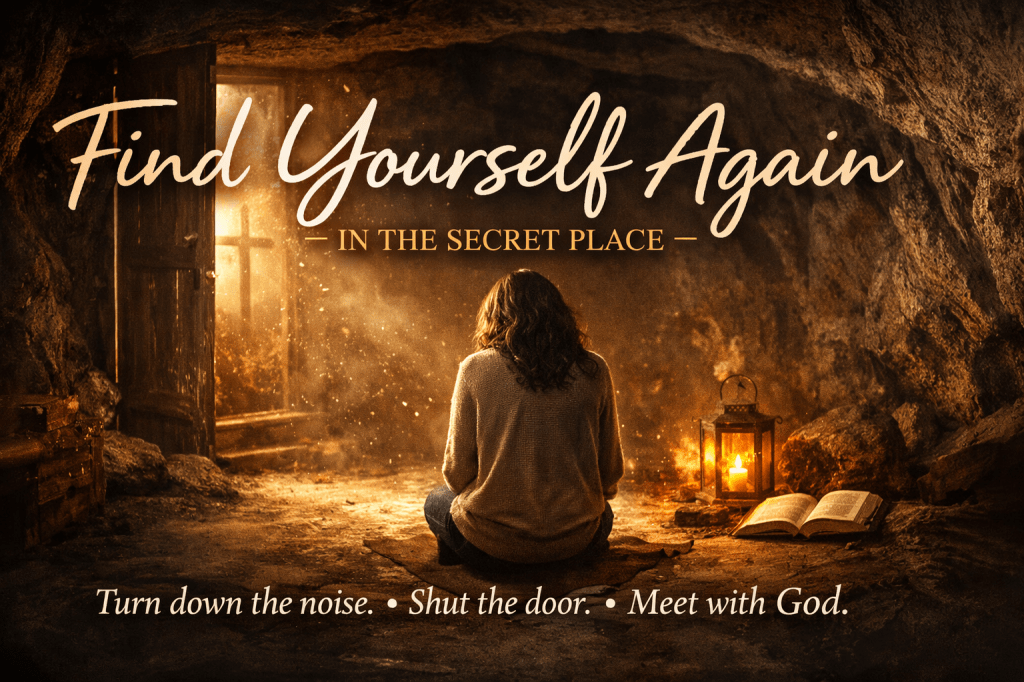
Freedom lives in the secret place.
Not a physical place. A sacred one. The place where only you and the Father have walked. The place you avoid because it feels too deep, too raw, too exposed.
But that is where she is.
The happy, carefree, full-of-life, Jesus-got-this kind of girl. She isn’t gone. She’s buried under fear, disappointment, and exhaustion.
Scripture says,
“He who dwells in the secret place of the Most High shall abide under the shadow of the Almighty.” — Psalm 91:1
It takes courage to sit still long enough to feel what you’ve been outrunning. Courage to face the darkest parts of your own heart. Courage to stop surviving and start seeking.
But healing does not happen on the surface.
It happens in the depths—the place where the tears fall freely and the masks come off. The place where you finally whisper the prayers you’ve been afraid to pray.
And there, in that quiet, the Father meets you.
Not with shame. Not with disappointment. But with presence.
Until you choose to rise and visit the hidden places of your soul, you will never rise from the ashes of the life you are living.
It is okay to feel. It is okay to stop. It is okay to take time for you. To be quiet. To be still. To search. To seek. To pray.
Push yourself toward what makes you healthy. Safe. Stable. Whole.
Turn down the noise. Shut the door. Go to the secret place.
And stay.
Because when you do, the pieces begin to settle. The lies lose their grip. The chaos grows quiet.
And one day you will look in the mirror again—
And recognize her.
Not the woman who barely survived. But the one who went into the depths… and came back alive.
There are wounds you can see. And then there are the ones that bleed quietly beneath the surface.
Emotional neglect creates wounds that do not bruise the skin but fracture the spirit. When instability becomes your normal — when love feels conditional, when affirmation is rare, when your value is questioned more than it is celebrated — you begin to question yourself. Your worth. Your character. Your place.
You replay conversations. You analyze your tone. You shrink to make things easier.
And still, it is not enough.
Healing in that environment feels like a revolving door. Just when you think the wound is closing, another careless word, another dismissive glance, another broken promise tears it open again. Open wounds make you lose yourself in the mess of your circumstances. They keep you focused on survival instead of restoration. They convince you that endurance is the same thing as healing.
But it is not.
There must come a moment — quiet but firm — when you realize that tending to your own soul is not selfish. It is necessary. There must come a time when you decide to put yourself first, to cut off the chains that have kept you bound to confusion, to chaos, to constant questioning. A season of healing will ask things of you. It may require letting go. It may mean surrendering what you hoped would change. It may even mean walking away from the ones you love most.
That is not weakness. That is courage.
Healing is not loud. It is not dramatic. It is often unseen. It is choosing peace when dysfunction calls your name. It is choosing truth when lies have defined you. It is choosing to believe that God did not design you to live in perpetual wounding.
Scripture reminds us:
“He heals the brokenhearted and binds up their wounds.” — Psalm 147:3
Notice — He binds up their wounds. He does not shame them for having them. He does not rush them through the process. He does not dismiss the depth of the pain. He draws near and tends to what is open.
The journey of healing is one only you can walk — but you do not walk it alone. Your Maker is not intimidated by your trauma. He is not exhausted by your tears. He is not confused by your questions. Where people were inconsistent, He is steady. Where love was withdrawn, His remains.
Do not lose hope over the open wounds.
They are not proof that you are unworthy. They are proof that something hurt you.
And what hurt you does not get to define you.
Choose life. Choose healing. Choose the slow, sacred process of becoming whole again.
The wound may be open today. But it does not have to stay that way.
Loneliness is not something we choose. It is not something we crave. It is a dark and tender place we sometimes find ourselves in at the most unexpected moments of life. A place that feels cold. Heavy. Quiet in ways that echo too loudly.
It can feel impossible to carry the burdens we bear when there is no one beside us to help hold them.
In those moments, what we long for is simple—conversation. Connection. The kind of emotional safety that allows us to exhale. The kind of bonding that lets us be fully ourselves without fear of judgment. There is something sacred about genuine conversation. It reaches into the deepest parts of our loneliness. It reminds us we are seen. It can bring light to the worst of days and lift our spirits just enough to keep going.
Sometimes it’s the smallest things—a shared laugh, a thoughtful message, a few minutes of feeling understood. Little bursts of sunshine. Brief reminders that we are alive and that someone notices.
But when that connection fades… when the conversation stops… when what felt like your last lifeline slips away, the grief can take you by surprise.
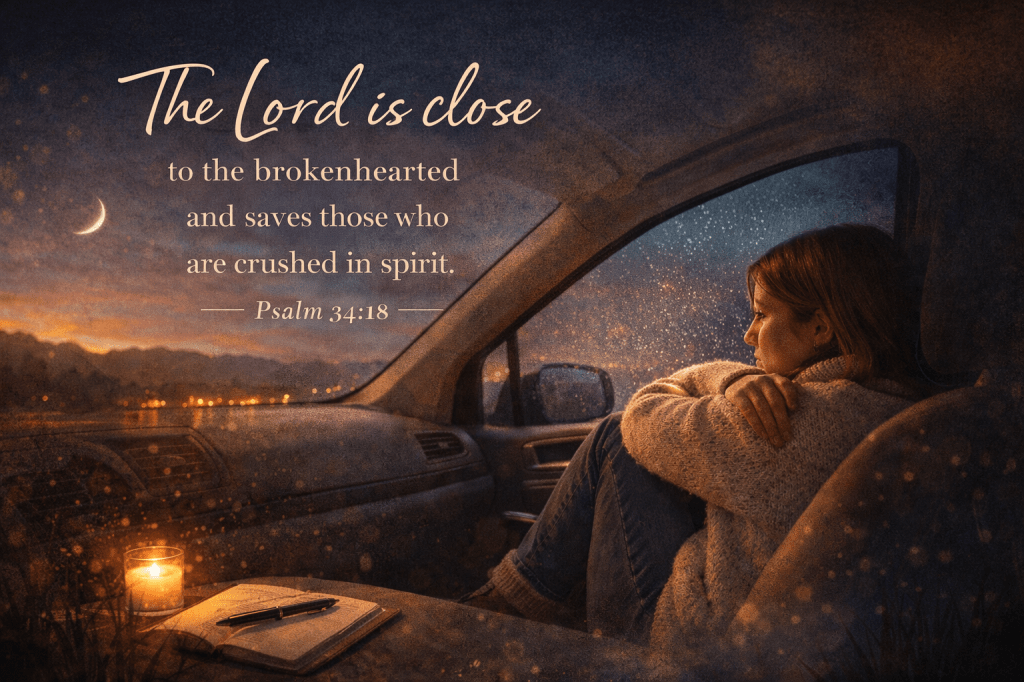
You find yourself staring into the stillness of the day. Sitting in the car longer than necessary, gathering the strength to step back into normal life. Lying awake at night, alone with thoughts that replay what once was. And in those quiet hours, you feel grief—not only for the person or connection you lost, but for who you were in that season… and for what you hoped it might become.
It is grief for what was. Grief for what could have been. Grief for the version of you that felt less alone.
And yet, even there—in the quiet car, in the sleepless night, in the ache you can’t quite name—Scripture whispers something steady and true:
“The Lord is close to the brokenhearted and saves those who are crushed in spirit.” — Psalm 34:18
Close. Not distant. Near. Not absent.
When loneliness convinces you that you are unseen, God draws nearer still. When your spirit feels crushed under the weight of loss, He does not turn away from your grief—He moves toward it.
And in those desperate, fragile moments, a question rises in the silence:
How far are you willing to go for connection? How much of yourself are you willing to trade just to not feel alone?
Loneliness can tempt us to reach for anything that promises relief. But not every connection is healthy. Not every conversation is safe. Not every lifeline leads to life.
Sometimes the bravest thing we can do in our loneliness is pause. To remember that our longing for connection was placed in us by God—not to drive us toward desperation, but toward healthy, life-giving relationships. Toward Him first. Toward people who reflect His heart.
You are not weak for feeling lonely. You are human.
And even in the quiet, unseen places, you are not abandoned. He is close.
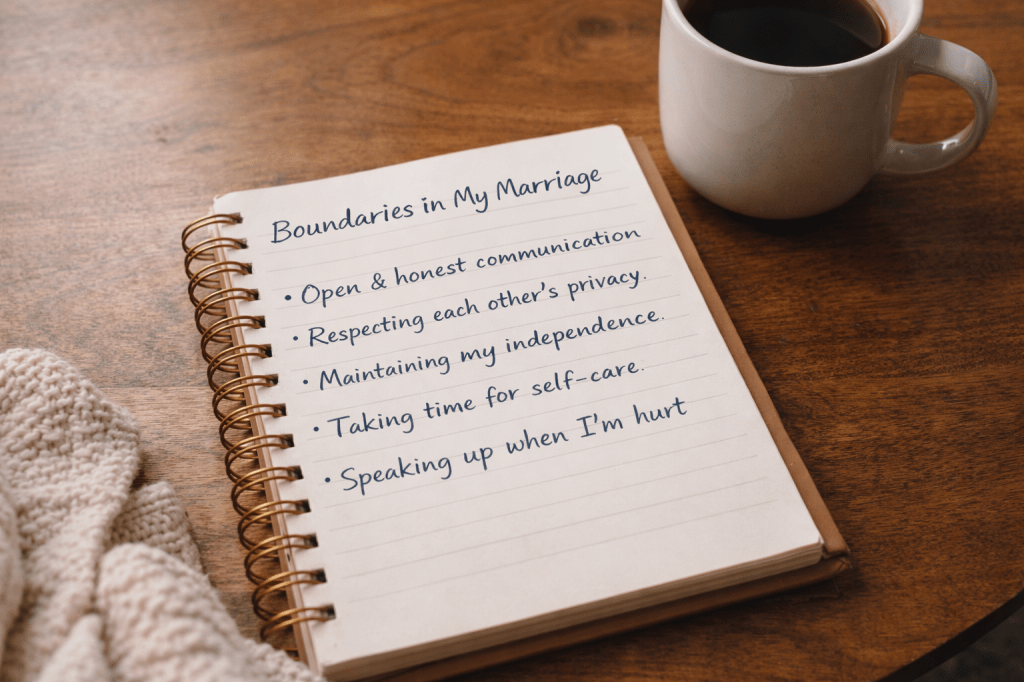
Boundaries are the invisible lines we place in our relationships to protect our character, guard our hearts, preserve self-respect, and uphold our dignity. They are not walls meant to shut people out, but safeguards that keep us whole.
But what happens when those boundaries begin to blur for the sake of a partner?
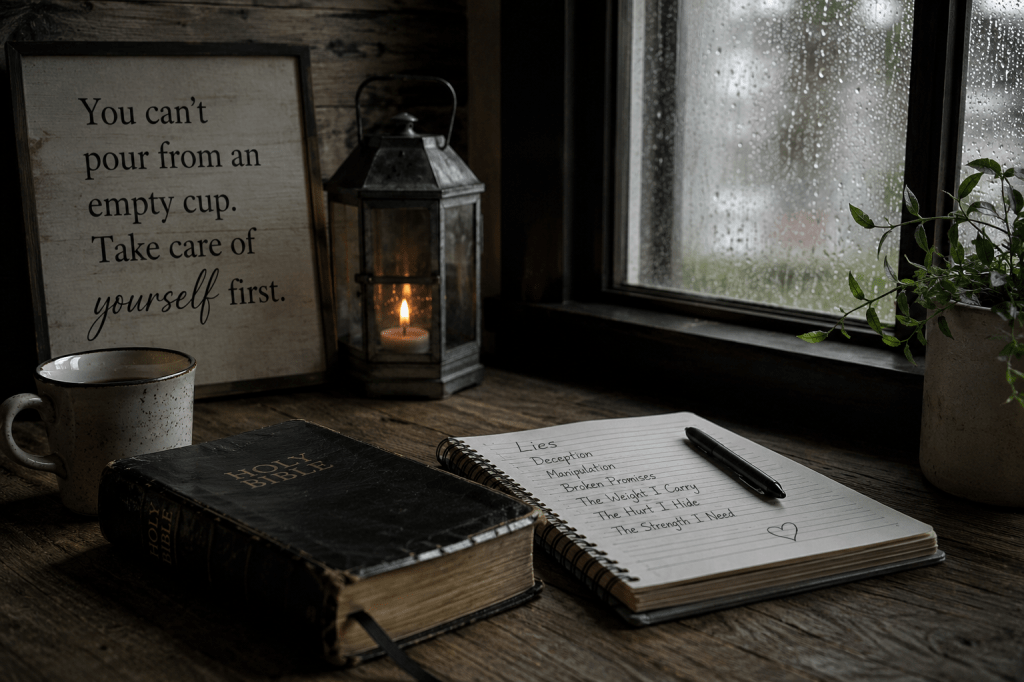
Too often, we overgive, overlove, and overextend ourselves until there is nothing left. We pour from an empty cup, believing sacrifice equals love, while slowly losing pieces of who we are. Boundaries were never meant to create conflict or push people away—they are necessary to allow us to be the healthiest version of ourselves without being taken for granted, walked over, mistreated, or devalued simply because our limits make someone uncomfortable.
When hate, rudeness, selfishness, sinful habits, or addiction begin to erode those boundaries, love does not mean silence. Love means pushing back—with truth, grace, and firmness—and enforcing what protects both your heart and your calling.
When boundaries are abandoned in marriage, the result is not unity but division. Not intimacy, but dependency. Not peace, but exhaustion. And over time, the slow erosion of boundaries often leads to the complete loss of what once was.
Healthy boundaries don’t destroy relationships—they reveal whether a relationship is healthy enough to survive. And sometimes, the most loving thing you can do is refuse to lose yourself in the process of loving someone else.
“Above all else, guard your heart, for everything you do flows from it.” — Proverbs 4:23
Boundaries are not a lack of love—they are wisdom in action. Guarding your heart honors the life God has entrusted to you and preserves the love He intends to flow through you. When boundaries are upheld with truth and grace, they become an act of obedience, not rejection—an invitation to walk in health, wholeness, and lasting love.
If I make my bed in the depths, You are there.” — Psalm 139:8 (NIV)
That feeling. That thought. That deep emotion that instantly takes you to your secret place.
The place you go to escape — to not exist, to not feel. The place you only visit in desperate moments, when reality feels heavy, hopeless, breathless. A place that somehow feels both lifeless and powerful as you control each breath, taking in the oxygen your body so desperately craves.
It’s like sitting at the bottom of a vast body of water, drowning out everything in existence except the steady rhythm of your own breathing. Time freezes. The noise you’re escaping slowly fades into the distance while you soak in the silence, the darkness, the serenity of nothingness.
As the oxygen begins to dissipate, everything in you longs to stay there — alone, silent, suspended, lifeless.
Then, in a single moment, comes the gasp. Fresh air floods your lungs. Life rushes back in. Reality hits like a brick.
And it’s in that moment you realize something powerful: you were still in control of your chaos.
That brief glimpse of nothingness — the stillness you longed for — was given for only a moment. And as your lungs refill, you’re reminded of the gift of life… the miracle of breath.
It is in moments like this that I truly appreciate life. The awareness that tomorrow is never promised. The understanding that my time here on earth rests fully in the hands of my Master.
These moments bring clarity — a deep appreciation for breath, for choice, for life itself. Even in the darkest places, God’s mercy and grace never fail. They sustain me. They call me to choose Him. To choose life in the chaos.
And even when it feels like there is no way forward — only the deep darkness of a silent sea — He walks with me through every weary step of my journey. Even in the deepest, darkest waters.
One of my go-to encouragement songs says:
“And I’ll testify of the battles You’ve won, How You were my portion when there wasn’t enough. And I’ll testify of the seas that we’ve crossed, The waters You parted, the waves that I’ve walked.”
In my deepest moments of desperation — at the bottom of what feels like an endless sea — God parts the waters. He gives breath to my lungs and strength to walk the waves once again.
It is only through complete surrender that I release control and hand my battles over to Him.
You will face battles. You will suffer moments of desperation. You may even feel as though your time on this earth should end.
Let this be your reminder: breathe. Just breathe.
There is a God who sees you, hears you, and fights for you. A God who parts waters, restores breath, and gives strength to rise again. Even when you feel buried in the depths of the sea, He fills your lungs and leads you back to the surface.
Put your faith in Him. Allow Him to be your breath.