
This is the part that makes addiction so confusing.
My marriage is not bad all the time.
In many ways, it is good.
We laugh.
We enjoy each other.
We can be close.
We can still be intimate.
There are moments when I look at my husband and feel the connection that made me fall in love with him in the first place.
And then there is the addiction.
It sits in the middle of everything good like a weight no one else can see.
Because while the marriage may look normal, and sometimes even feel normal, I am often carrying things quietly underneath it.
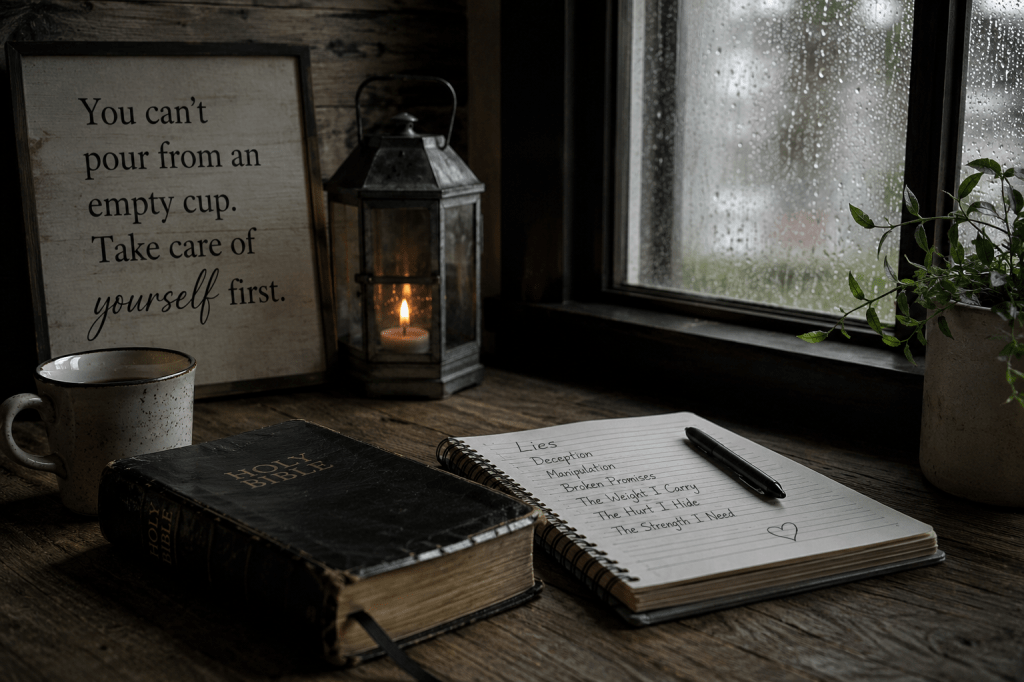
The lies.
The deception.
The manipulation.
The broken promises.
The questions I don’t always ask because I already know where the conversation may go.
The hurt I swallow because I don’t want to ruin a good day.
The things I pretend don’t bother me because I want my family to feel okay.
That is the strange part of loving someone with severe PTSD and addiction.
You can genuinely love each other and still be living with something that is slowly destroying trust.
I Don’t Think He Wants to Hurt Me
I truly don’t believe he wakes up wanting to hurt me.
I believe he loves me.
I believe he loves our family.
I believe there are moments when he is deeply sorry for the pain he has caused.
That is what makes it so difficult to understand.
Because if he loves us, why does the addiction keep winning?
Why do the lies continue?
Why does he hide things he knows will eventually be discovered?
Why does he manipulate the truth when he knows what deception has already done to me?
I think addiction has a way of shrinking a person’s world.
For someone carrying severe PTSD, escape can begin to feel like survival.
The mind becomes focused on relief.
Relief from the anxiety.
Relief from the memories.
Relief from the shame.
Relief from whatever is happening inside.
And in that moment, the addiction can become louder than the consequences.
Louder than the marriage.
Louder than the promise.
Louder than the pain waiting on the other side.
That doesn’t mean the family doesn’t matter.
It means addiction can distort priorities so badly that the person stops seeing the full destruction taking place around them.
Then the Lie Protects the Addiction
Sometimes I think the lie becomes just as important as the addiction itself.
Because telling the truth means facing consequences.
It means looking at the person you love and admitting you did the very thing you promised you wouldn’t do.
It means facing disappointment.
It means shame.
It means accountability.
So instead, the truth gets softened.
Pieces get left out.
Things get denied.
The story changes.
And suddenly I am questioning myself again.
Sometimes the hardest part isn’t even what happened.
It’s knowing I may not be getting the whole truth.
That does something to a wife.
You begin listening differently.
Watching differently.
Paying attention to tiny changes.
Wondering if something is off.
And then feeling guilty because you don’t want to become suspicious of the person you love.
I Carry More Than He Realizes
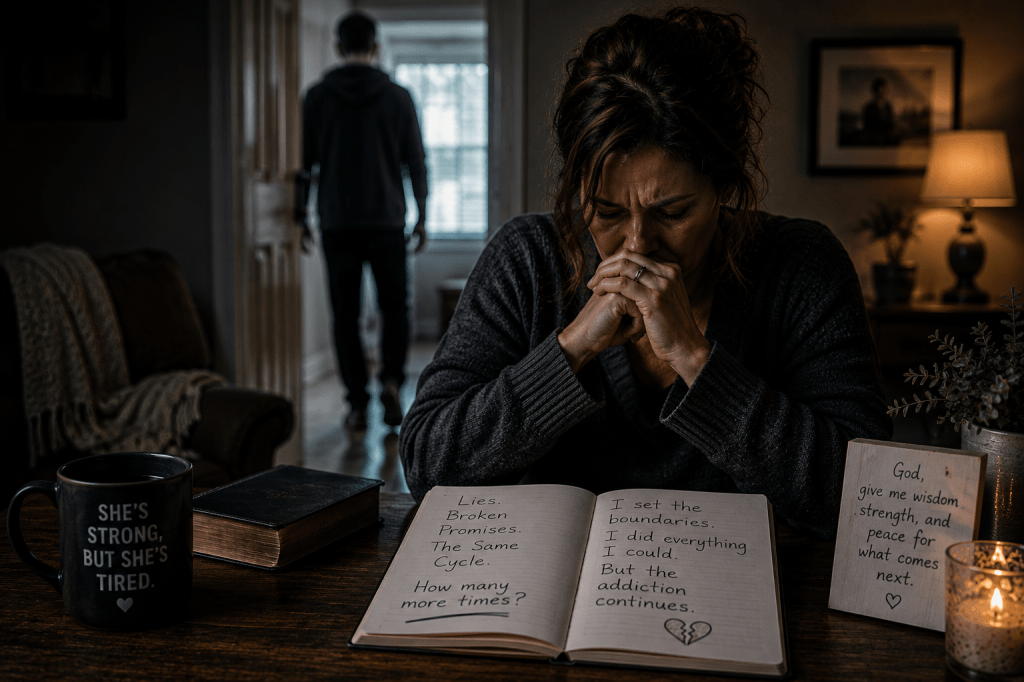
I don’t think he fully understands what I carry.
I carry the knowledge of what has happened before.
I carry the fear that it could happen again.
I carry the financial consequences.
I carry the responsibility of protecting things from falling apart.
I carry conversations in my head that I never say out loud.
I carry the hurt from things I’ve forgiven but haven’t forgotten.
And sometimes I carry all of that while sitting beside him on the couch, laughing at something on television.
That is the part people don’t see.
You can love someone.
You can have a good day.
You can be affectionate.
You can still share a bed.
You can have moments where everything feels almost completely normal.
And still have a part of you quietly hurting underneath it all.
Sometimes I think wives become very good at holding both realities at the same time.
I love him.
And:
This is hurting me.
Both are true.
Understanding Isn’t the Same as Excusing
I have spent a lot of time trying to understand PTSD and addiction.
And understanding has helped me have compassion.
But I am learning that compassion can become dangerous when I use it to explain away everything that hurts me.
PTSD may explain why he wants to escape.
Addiction may explain why his thinking becomes distorted.
Shame may explain why telling the truth is difficult.
But none of those things make deception harmless.
They don’t erase the damage.
They don’t make manipulation okay.
And they don’t magically rebuild trust.
I can understand why something happens and still say:
This is not okay.
That has been a difficult lesson for me.
Maybe He Doesn’t See the Weight Because I’m Carrying It So Well
Sometimes I wonder if part of the reason he doesn’t fully see the impact is because I have become so good at carrying it.
I keep going.
I keep working.
I keep the family functioning.
I take care of what needs to be taken care of.
I forgive.
I pray.
I smile.
I show up.
I tell people we’re okay.
And maybe from the outside, we are.
But there are parts of me that are exhausted from carrying things quietly.
Maybe I have protected everyone from seeing the weight for so long that I sometimes forget I am allowed to admit that it is heavy.
Love Doesn’t Cancel the Damage
This is what I am beginning to understand.
A person can love you and still hurt you deeply.
A marriage can have beautiful moments and still contain something destructive.
You can be emotionally and physically close to someone and still feel lonely in the places where trust has been broken.
Those realities do not cancel each other out.
I don’t have to convince myself the entire marriage is bad in order to admit that addiction is harming it.
And I don’t have to deny the good in order to tell the truth about the pain.
I can say:
My husband loves me.
Our marriage has good in it.
We still have closeness.
And also:
The addiction continues to wound me.
The lies have changed me.
The manipulation has made me question myself.
And carrying all of it quietly is exhausting.
Maybe that is the truth I need to stop hiding from myself.
Because pretending I am okay does not make me okay.
And protecting everyone else from the truth does not make the truth disappear.
I still believe God can heal addiction.
I still believe people can recover.
I still believe marriages can be restored.
But I am learning that hope does not require pretending.
I can hope for change while acknowledging the weight I am carrying right now.
And maybe healing for me begins when I stop telling myself that because there is still love, I shouldn’t be hurting.
There is still love.
And I am still hurting.
Both can be true.
And maybe on the days when carrying both feels too heavy, I need to remember that none of it is hidden from God.
“Thou tellest my wanderings: put thou my tears into thy bottle: are they not in thy book?” — Psalm 56:8
There is something comforting about knowing that even when no one else fully sees the weight I am carrying, God does.
He sees the tears I wipe away before anyone notices.
He sees the conversations I replay in my mind.
He sees the hurt behind the smile.
He sees the love I still have for my husband and the pain that exists right beside it.
Nothing about my grief is hidden from Him.
Maybe that is where I need to rest when I am tired of pretending I am okay.
There is still love.
And I am still hurting.
Both can be true.
And God sees them both.





 Life As A PTSD Wife